Best Known For
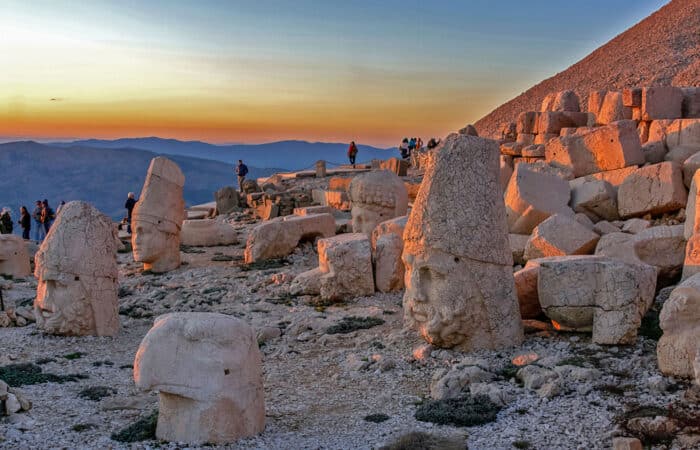
Colossal Stone Heads
Built
1st Century BCE
Civilization
Kingdom of Commagene
Suggested Duration
2–3hr
Mount Nemrut rises above southeastern Turkey with a sight that feels improbable even after the road has revealed the mountain: colossal stone heads resting below the thrones where kings and gods once faced the horizon. The sanctuary belongs to Antiochus I of Commagene, a ruler who used this remote summit to place his dynasty within both Persian and Hellenistic traditions.
The fallen heads draw the eye, yet the wider composition carries the meaning. A conical tumulus dominates the summit, with ceremonial terraces, guardian eagles and lions, ancestral reliefs and long inscriptions arranged around it. Sunrise and sunset add atmosphere, although clear light, manageable weather and enough time for both principal terraces matter more than a single photograph.
Reaching Mount Nemrut takes planning. The nearest practical airport is Adiyaman, the final road climbs through exposed mountain terrain, and snow can restrict seasonal access. A well-paced visit therefore begins with the route and weather, then fits the light around those realities.

Planning a trip to Mount Nemrut soon? Answer this trip planner and get your FREE quotation within 24 hours.
Antiochus I ruled Commagene in the first century BCE, when the small kingdom occupied a strategic zone between larger Roman and Parthian spheres of power. At Mount Nemrut, he presented himself beside a pantheon whose names and attributes joined Greek and Iranian traditions. The program also traced his claimed ancestry toward both Alexander the Great and the Persian Achaemenids.
Mount Nemrut is generally described as a hierothesion: a sacred funerary complex and house of the gods. The stone-chip mound is about 50 meters high and roughly 145 meters across today. Ancient inscriptions identify the purpose of the sanctuary, but Antiochus’s burial chamber has never been located inside the tumulus. Calling the mound a pyramid obscures its actual construction and ritual setting.
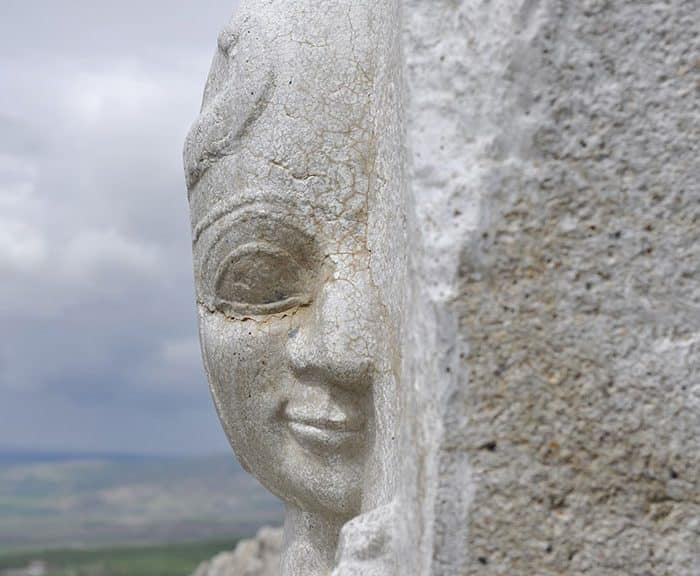
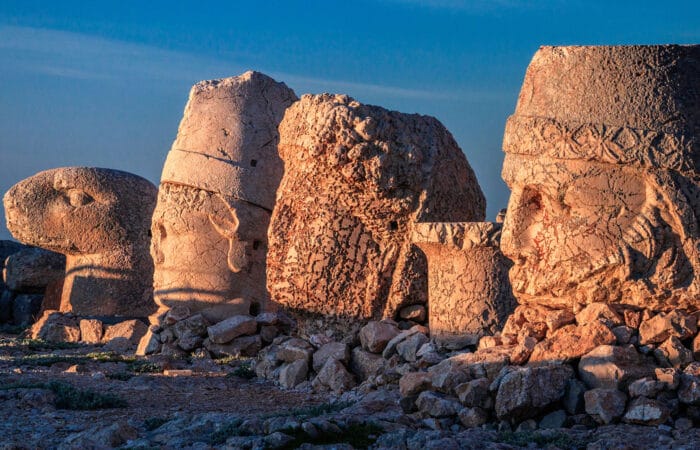
Mount Nemrut’s seated figures were originally several meters high. Their detached heads now stand on the terraces below the surviving bodies. Antiochus appears with deities including Zeus-Oromasdes, Apollo-Mithras and Heracles-Artagnes, while eagles and lions guard the assembly. The sculptures are more than 2,000 years old, dating from the reign of Antiochus I between 69 and 34 BCE.
Adiyaman Airport (ADF) is the closest practical airport to Mount Nemrut. Kahta is the usual gateway on this side of the mountain, while Adiyaman provides a larger city base. Flight schedules change, so compare the live arrival with the planned mountain visit before choosing where to sleep.
Malatya Airport (MLX) can suit an itinerary approaching from the north. It usually creates a longer road journey to the summit area, so the wider route must justify the choice. A private vehicle and driver simplify the early or late mountain hours, especially when the itinerary also includes Karakus Tumulus, Cendere Bridge and Arsameia.
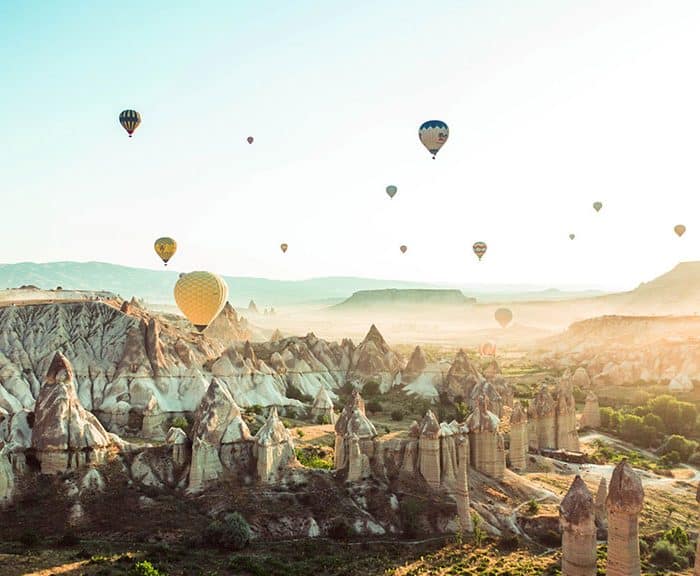
From Cappadocia, expect a full overland transfer rather than a casual day trip. Driving time varies with the starting point, route and road conditions, but seven to eight hours is a sensible planning range before stops. The journey works best as a bridge into southeastern Turkey, with an overnight near Adiyaman or Kahta. Trying to combine the transfer, sunset, sunrise and an immediate departure compresses the monument into two tiring edges of the day.
The East Terrace is associated with sunrise and the West Terrace with sunset. Either can be rewarding, but cloud, haze and wind decide more than the timetable. Sunset is usually easier to fit after a daytime arrival. Sunrise demands an early departure in darkness and makes a nearby overnight more valuable.
Late spring through early fall generally offers the most workable access, yet altitude makes the summit far colder than Adiyaman or Kahta. Conditions can change quickly. Winter snow and ice may close or complicate the upper road, so access should be confirmed shortly before travel instead of treated as a fixed annual season.
Photographers should allow time beyond the peak color. Side light reveals the weathered surfaces, and the terraces become easier to read once the largest sunrise or sunset groups begin to move. Protect the historical visit first; the sky is an uncertain bonus.
Mount Nemrut’s summit is not a dining destination, and the visit should not depend on finding a meal near the terraces. Carry water and arrange breakfast for an early departure or dinner after sunset. A hotel that can prepare food at the required hour is more useful than an ambitious menu that does not match the mountain schedule.
Adiyaman’s table draws on southeastern Anatolian cooking. Look for dishes built around bulgur, eggplant, lamb, yogurt and local herbs, along with regional preparations such as çiğ köfte where the establishment and serving style inspire confidence. Kahta offers practical meals close to the route; Adiyaman gives a broader choice. Choose according to timing rather than adding another transfer for dinner alone.
A proper Mount Nemrut visit involves uneven, inclined paths between the parking area and the terraces. Exact walking conditions can change with maintenance, weather and the operating approach in use. Travelers with limited mobility should request current details before committing; the altitude, wind and loose surfaces matter as much as distance.
Wear footwear with grip and carry a warm outer layer, even when the plains below are hot. A flashlight helps before sunrise or after sunset. Stay on designated paths, do not climb the tumulus and never touch or lean on the sculptures and reliefs.
Mount Nemrut’s opening arrangements follow daylight and operational conditions. Confirm the current status shortly before departure, then leave a margin for the mountain road. Missing the first minutes of sunrise is inconvenient; rushing an exposed road in darkness is a poor trade.


The East Terrace preserves the sanctuary’s most formal arrangement, with the seated colossi, an altar platform and royal program facing the dawn. The West Terrace holds another monumental group along with the celebrated dexiosis reliefs, which show Antiochus greeting deities. The surviving Lion Horoscope relief is kept under protection rather than exposed as an ordinary photo stop.
Seeing both sides explains why Mount Nemrut cannot be reduced to a row of stone heads. The path around the tumulus connects architecture, landscape and royal ceremony; budget enough time to walk it without hurrying.
The gods carry paired identities drawn from Greek and Iranian religious traditions. That combination reflects Commagene’s political and cultural position, as well as Antiochus’s deliberate image of kingship. Modern national labels distort the ancient evidence and the identities expressed at the sanctuary.
Mount Nemrut is famous because this ambitious royal program survives in a dramatic high-altitude setting. The sanctuary’s scale, inscriptions and mixed artistic language give the sculptures their importance; their age alone does not explain the site.
Use the official Mount Nemrut visitor listing to check the current opening arrangement before departure. The listing notes that hours may vary with sunrise and sunset. Road access, snow and local operations remain live-status questions, so reconfirm them through the tour operator, driver or hotel close to the visit.
For a private itinerary, the meaningful upgrade is sound sequencing: the right airport, a well-positioned overnight and a vehicle suited to the scheduled hour. These choices preserve rest and allow time for the terraces. They do not create privileged access to the monument.
Karakus Tumulus, Cendere Bridge and Arsameia can place the summit within a wider Commagene landscape. Together they show royal burial, Roman infrastructure and political imagery across the valleys below Mount Nemrut. Include them when the day has enough light and the group can handle repeated stops.
A single mountain visit may be the better choice after a long transfer or for travelers conserving walking energy. Depth comes from understanding the sanctuary, not from collecting every nearby monument before sunset.
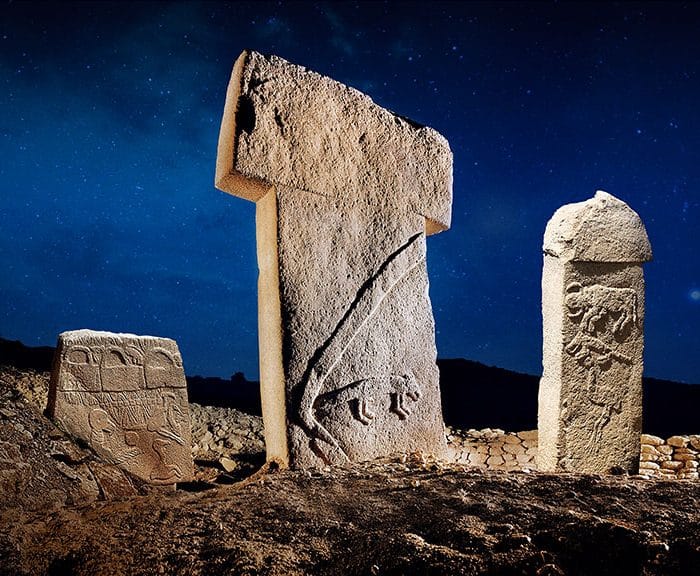
Continue southeast to Sanliurfa for Gobeklitepe and Karahantepe when the itinerary follows archaeology across the region. This creates a coherent route from Commagene’s Hellenistic royal landscape into the much earlier Neolithic sites.
Cappadocia can sit before Mount Nemrut on a longer overland journey, while Gaziantep adds one of Turkey’s strongest museum and food stops. Malatya makes sense when flight schedules or a northern route support it; it is not an obligatory addition.