Best Known For
Human Sculptures
Built
c. 9500-8000 BCE
Civilization
Pre-Pottery Neolithic
Suggested Duration
1.5-2hr
Karahantepe is often introduced as the lesser-known neighbor of Göbeklitepe. The comparison helps place it on the map, but the site has its own character: buildings sunk into limestone, upright pillars emerging from the bedrock and human faces that meet the visitor at eye level.
Excavation began in 2019 and has already changed how archaeologists describe early Neolithic life around Sanliurfa. Communal buildings stood close to spaces used for daily work, while sculpture formed part of the architecture itself. Karahantepe feels less like a single monument and more like a settlement taking shape across a rocky ridge.
That immediacy is also the reason to plan carefully. This remains an active excavation, and visitor access has changed as work continues. Confirm that the site is open before assigning it a full morning; once access is secure, allow enough time for the road from Sanliurfa and for an unhurried look at the excavated buildings.

Planning a trip to Karahantepe soon? Answer this trip planner and get your FREE quotation within 24 hours.
Karahantepe was recorded in 1997 during archaeological surveys in the Tek Tek Mountains. More than 250 T-shaped pillars were identified at the surface, making clear that the limestone ridge held a substantial Neolithic settlement. Systematic excavation under Professor Necmi Karul began in 2019.
The excavated buildings belong to the Pre-Pottery Neolithic, broadly from the 10th into the 9th millennium BCE. Dating is still being refined, so claims that Karahantepe is definitively older than Gobeklitepe go further than the current evidence. Their occupation histories overlap, and the stronger story lies in what the two sites reveal together.
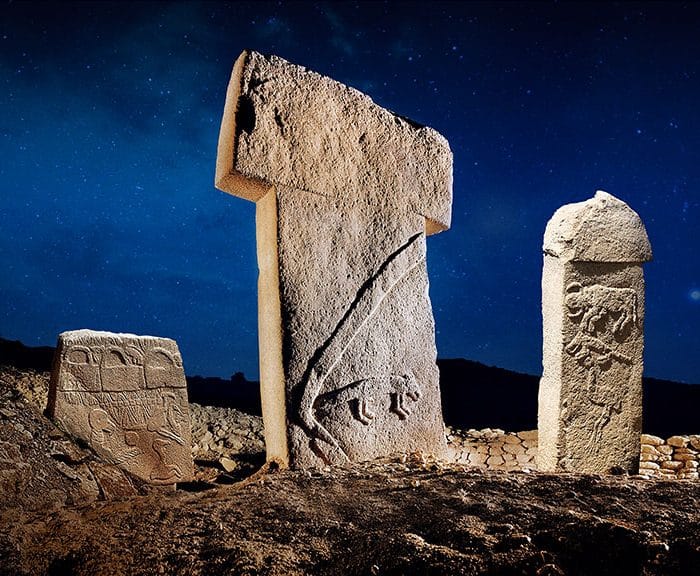
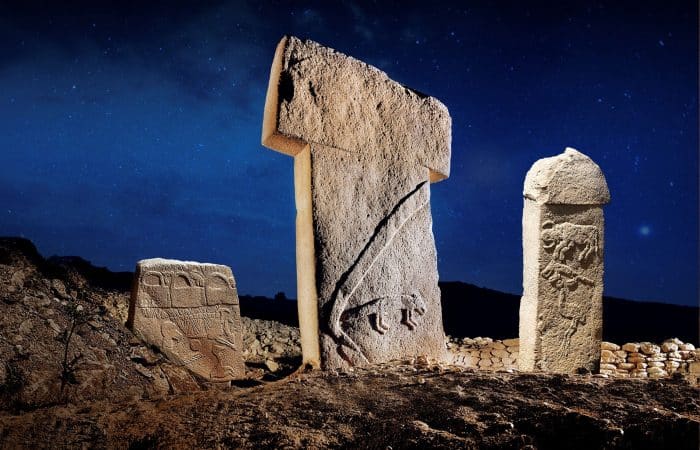
The builders used the ridge as both quarry and architecture. They cut floors and walls into the limestone, raised T-shaped pillars and arranged benches around communal spaces. One large circular building measures roughly 23 metres across and descends several metres into the rock.
An adjoining chamber contains upright stone forms and a human head carved from the bedrock. Its arrangement is visually powerful, although its original use remains open to interpretation. The safest reading begins with what survives: a carefully staged space, controlled movement between buildings and human imagery placed at the centre of the experience.
Grinding stones, mortars and other traces of food preparation have been found around the communal buildings. These finds bring ordinary work into the same landscape as monumental architecture and sculpture. The people who gathered here were also living, processing food and maintaining a settlement.
Together, these finds move the discussion beyond the old image of a remote temple complex. Social life, symbolism and subsistence developed side by side during the early Neolithic.
Important for 2026: the official listing currently marks Karahantepe as closed. Access may change as excavation and visitor works progress. Check the official Karahantepe visitor listing shortly before travel and reconfirm locally before building the day around entry.
Karahantepe lies about 55 kilometres from central Sanliurfa in the Tek Tek Mountains National Park. The journey is a rural drive rather than a short city transfer, and the final approach adds time. Private transport is the practical choice when the visit is part of a wider Sanliurfa itinerary.
Allow about 1.5 to 2 hours on site once entry is confirmed. Archaeology specialists may stay longer, but road time, heat and the limited visitor infrastructure should be considered before adding another major site to the same day.
The Sanliurfa Archaeology Museum gives the strongest introduction to the region’s Neolithic chronology and sculpture. Visiting the museum first makes the architecture at Karahantepe easier to read, especially for travellers who have not yet seen Gobeklitepe.
A two-day plan works well: museum and old city on the first day, Karahantepe the following morning. Harran may share the second day when access, daylight and road conditions align. Adding Gobeklitepe as well usually leaves too little attention for three demanding archaeological visits.
April, May, late September and October usually offer the most comfortable balance of daylight and temperature. The exposed ridge has little shade, so even a moderate forecast can feel warmer once you begin walking among the excavated structures.
From June into September, aim for the earliest confirmed entry. Carry water, a hat and sun protection, and keep the afternoon flexible. Heat can shorten the visit long before it becomes a safety issue simply because concentration drops on an exposed archaeological site.
Winter can bring clear light and a quieter landscape, along with wind, rain and temporary access changes. Check the road and site status close to departure. On short winter days, leave enough daylight for the return journey or an onward drive to Harran.
There is no reason to make the archaeological site responsible for lunch. Sanliurfa offers a much wider and more rewarding choice, and the drive is easier when snacks and water are already in the vehicle.
Back in the city, look beyond a single kebab order. Lahmacun, borani, lebeni, stuffed aubergine, icli kofte and dishes seasoned with isot give a better sense of the regional table. Sillik, thin layers of batter with walnuts and syrup, is the local dessert worth remembering.
If Karahantepe is paired with Harran, agree on the lunch stop before setting out. An improvised detour on rural roads can consume the time saved by an early start.
Wear shoes with a stable sole; the ground is rocky and uneven in places. Bring water and sun protection, and expect fewer visitor comforts than at Gobeklitepe. The site’s unfinished quality is part of the experience, though it requires more preparation.
Do not step onto walls, benches or exposed bedrock features for a photograph. Keep clear of excavation areas and follow staff instructions, even when a route appears open. Small changes in access may reflect conservation work that is not obvious from the visitor path.
Karahantepe attracts confident explanations about hidden chambers, deities and coded rituals. The excavated architecture is compelling without those claims. A specialist guide should show what was found, explain the leading interpretations and be comfortable saying where the evidence stops.


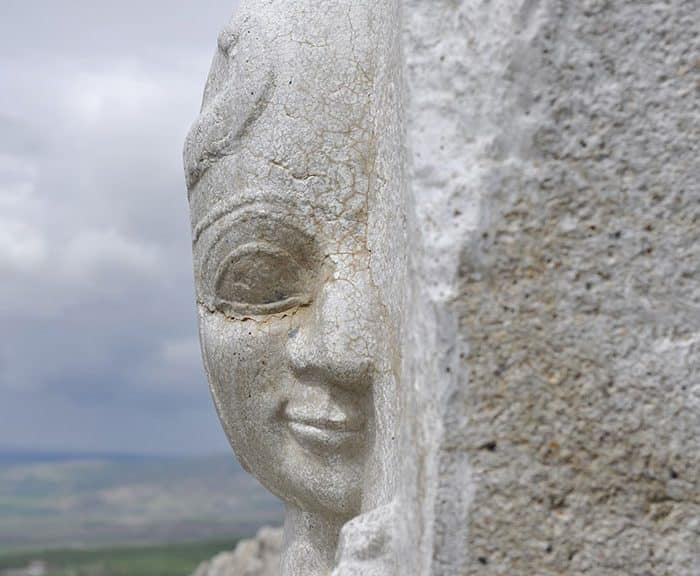
Human imagery gives Karahantepe its distinctive visual language. Carved heads, faces and bodily forms appear inside buildings rather than as objects displayed separately from them. Visitors encounter sculpture as part of the space, close to benches, pillars and routes through the architecture.
The best-known examples include the bedrock head in Structure AB and the large male statue announced in 2023. Their expressions and physical presence feel unusually direct, yet their identities are unknown. Calling them gods, rulers, or ancestors would turn possibilities into facts.
The 2026 season added a new composite sculpture: a human figure seated on the back of a leopard. The limestone work stands about 70 centimeters high and was found in its original position on a bench inside a small circular building.
Its context makes the discovery more useful than an isolated museum object would be. Archaeologists can study the sculpture together with the room, floor and bench on which it stood. Its meaning has not been settled, and early suggestions about authority, danger or human-animal relationships should remain hypotheses.
The sites share T-shaped pillars, monumental communal buildings and a broader Neolithic setting around Sanliurfa. Their differences are just as useful. Gobeklitepe has the more developed visitor presentation and is dominated by large enclosures and animal reliefs. Karahantepe brings the bedrock into the architecture and places human sculpture more visibly at the center.
Seeing both helps replace the search for a single ‘first temple’ with a richer question: how did several communities across the Tas Tepeler landscape build, gather, tell stories and move towards more settled life?
Many travelers arrive expecting the site alone to explain itself. The Sanliurfa Archaeology Museum provides the objects, chronology, and regional comparisons that are difficult to convey at an exposed excavation. Give the museum real time, preferably before Karahantepe.
Karahantepe is strongest for travelers interested in archaeology, early settlement and the process of discovery. It also suits visitors who have already seen Gobeklitepe and want to understand why the wider region now matters so much.
Those seeking a polished attraction with extensive interpretation may prefer to wait until visitor works advance. For the right traveler, the rough edges are revealing: you can still see how excavation, conservation and interpretation are unfolding around the architecture.
Return to Sanliurfa for the Archaeology Museum, Balikligol, and the old bazaars if they are not already in the itinerary. Gobeklitepe deserves its own visit; placing both sites on separate mornings gives each one enough attention and avoids a long archaeological checklist.
Harran can follow Karahantepe when the site is open, the day starts early, and road conditions are straightforward. For a journey continuing east, Mardin is the natural next base. Mount Nemrut requires a separate route decision around daylight, seasonal access, and driving time.